
In a Montessori environment, children learn the fundamental principles of mathematics and science through hands-on exploration and discovery of natural laws. By working with scientifically designed Montessori materials and engaging in collaborative problem-solving, learning becomes meaningful and experiential. This sensory-based approach ensures deep understanding and internalisation of concepts rather than mere memorisation. True to Montessori philosophy, all areas of learning are interconnected, enabling children to recognise how mathematics, science, and nature exist in harmony.
Aligned with the National Education Policy (NEP) 2020, this program strongly emphasises the Foundational Stage (ages 3–8 years) — considered the most critical period for cognitive, social, and emotional development. The course integrates play-based, activity-based, and discovery-based learning methods as recommended by NEP, ensuring future educators are equipped to nurture holistic development in early learners.
This program is designed to shape empathetic, skilled, and future-ready preschool educators who can facilitate holistic growth and lifelong learning in young minds. Rooted in the teachings of Dr. Maria Montessori, the course provides an in-depth understanding of child development, early learning processes, and classroom practices based on Montessori philosophy.
- Certification to teach children aged 2–6 years in Indian schools and 2–10 years in international schools.
- Globally recognised Montessori Teachers Training Certificate.
- Ability to apply Montessori methodology and NEP-aligned foundational practices in classrooms.
- Expertise in handling Montessori apparatus and facilitating experiential learning.
- Skills in lesson planning, classroom management, and child-centred teaching.
- Hands-on practical training with Montessori materials.
- Access to expert-led training resources and a state-of-the-art Learning Management System (LMS).
Areas of Montessori Education
The five most important learning areas: Exercise of Practical Life, Sensorial, Language, Mathematics, and Culture.
Exercise of Practical Life
Practical Life includes life skills to develop independence, teamwork, concentration, self-control, self-awareness, and self-esteem.
- Self-care
- Environmental Care
- Kindness and Respect
- Control of Movement

Sensorial
Specially designed objects that separate attributes — sharpening fine muscle skills, visual and auditory senses, and improving coordination and the ability to order and differentiate. Items include the Pink Tower, Brown Stairs, and Cylinder Blocks. Senses refined include:
- Sight (visual)
- Touch (tactile)
- Smell (olfactory)
- Sound (auditory)
- Taste (gustatory)
- Kinaesthetic

Language
Language is based on phonetic awareness. Children work with language resources such as sandpaper letters, progressing to the moving alphabet. Language is not a single subject — it runs throughout the entire curriculum. Spoken language forms the foundation of literacy.
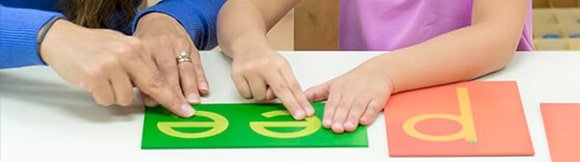
Mathematics
Mathematics is developed through tangible, concrete learning materials. The sensorial area prepares children for mathematics. Hands-on materials include number rods, sandpaper numbers, number boards, spindle boxes, beads, and games — each exercise building on the last, moving from concrete understanding to abstract concepts such as place value, addition, subtraction, multiplication, and fractions.

Culture
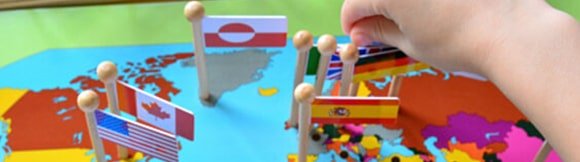
The Culture Curriculum covers Geography, Botany, Zoology, Science, History, Music, and Art. Through explorations of culture, children develop an understanding of their community, their world, and their social responsibilities. Example materials include:
- Land and Water Forms
- Continent Boxes
- Life Cycle Puzzles
- Map Cabinet
Certification
Kerala State RUTRONIX certified diploma — sets the foundation for graduates to work in any Montessori environment or develop their own.
Affordable
Tuition fees unmatched in the Montessori training market, including lifelong learning resources at the best possible value.
Quality
Experienced Montessori educators provide outstanding support. Our curriculum books are the most comprehensive available.
Support
Ongoing support for graduates to work in a Montessori environment, enrich existing programs, or develop their own.
Success
Programs designed to ensure successful completion. Graduates recognised by Montessori schools everywhere as well-trained professionals.
Demand
Montessori-trained teachers are in high demand. This certification opens doors across Indian and international educational markets.